

Some Changes I’m Making to Ottoman Encounters
And a curated reading list on the Ottoman imperial harem

Hello everyone!
I wanted to write you about some changes I’m making to Ottoman Encounters.
I will start with the part that probably matters most to you: everything you currently get stays free. The weekly essays, the book reviews, the archives, and the podcast interviews (I have a couple coming up soon). All of it will stay free and will not go behind a paywall.
Having said that, here is what is new.
Starting this month, I am adding materials that will be exclusive for the paid members. Once a month, alongside the three free posts, paid subscribers will get one substantial extra piece. This will either be a curated and annotated reading guide on a specific topic, or an in-depth exploration of a person, an object, or a place that left a mark on Ottoman and Middle Eastern history. These pieces take real time to assemble and draw most directly on my expertise as an Ottoman historian.
Let me be honest about why. I have written Ottoman Encounters for nearly two years without charging for any of it. I absolutely love writing about Ottoman and Middle Eastern history and making it accessible for a general audience. And I want to keep doing it for many years to come. A modest paid tier would make that goal sustainable and let me justify the hours that I put into the deeper pieces. I am not walling off the work you already find valuable. I am adding something for those of you who want to go further, and who want to help keep the rest free for everyone.
Which brings me to the first curated reading list below. It is on the Ottoman imperial harem, a topic that I am asked about constantly.
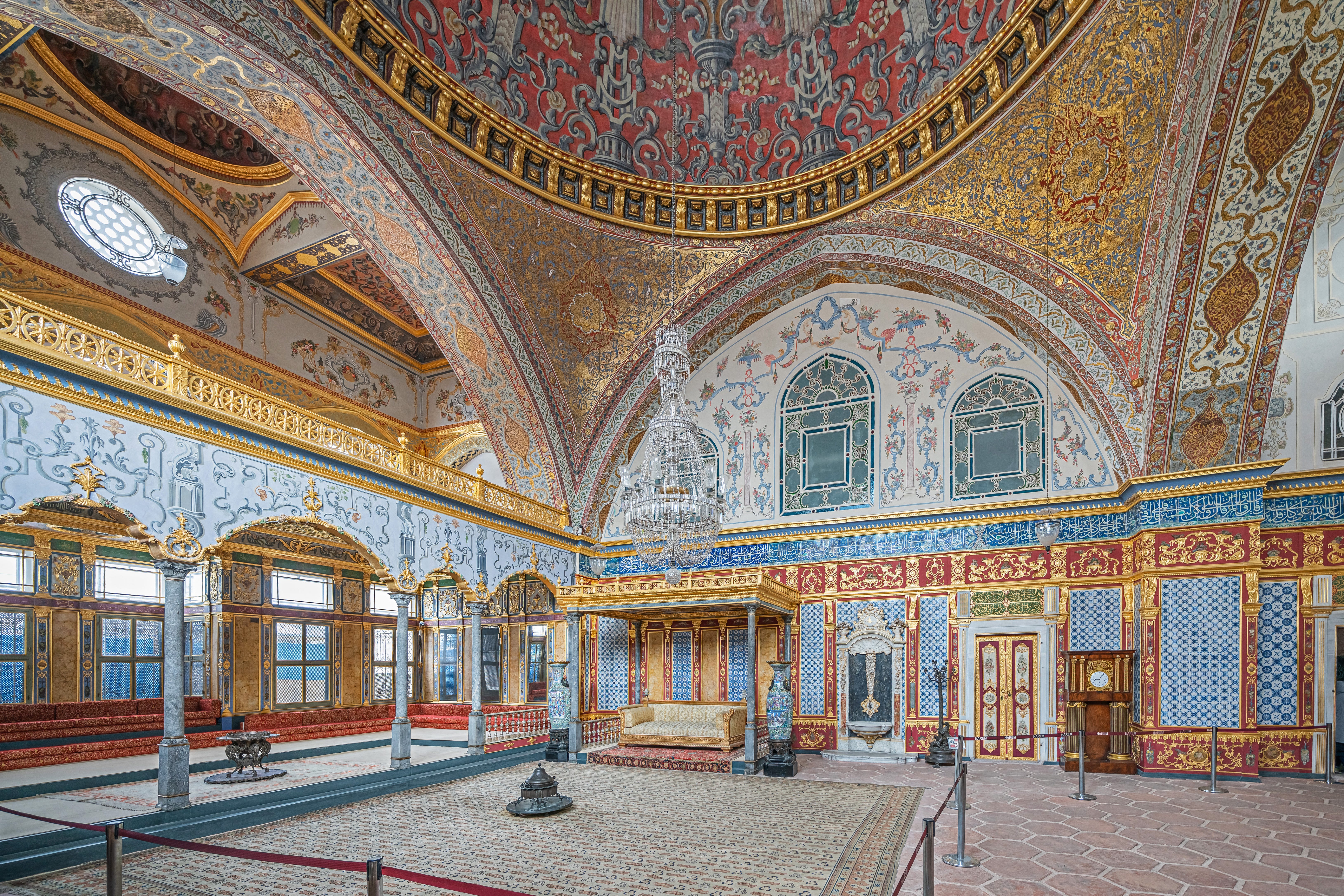
I chose it because, as I’ve written before, almost everything the popular imagination believes about the harem is wrong. The conventional image is of a place where hapless women were subject to the sultan’s debauchery and cruelty. That image is an Orientalist fantasy, constructed mostly by Europeans who defined the Ottoman/Muslim world as Europe’s inferior “other.”
The truth behind the Ottoman imperial harem was much more interesting. The harem was the heart of the imperial household, a center of political power, education, and dynastic strategy. It was headed by some of the most formidable women in Ottoman history, who had immense influence.
So where do you start, if you want to learn the real story rather than the fantastical one perpetuated to this day? That is exactly why I put together the guide below. It has seven key works on the topic, with detailed information on what each book argues, the contribution it makes to the literature, and how it would help you understand the topic better.
If that is the kind of thing you want, you can support the newsletter for $5 a month, or $50 for the year. The annual is cheaper if you already know you want to commit. Your support is what makes the free work possible, and the full guide is waiting for you the moment you become a paid subscriber.
If you would rather keep reading for free, that’s great, too, and I’m grateful for your time and attention. Nothing changes for you, and your reading has always been its own kind of support.
A Curated Reading List on the Ottoman Imperial Harem
These seven books will give you an in-depth understanding of the real story behind the Ottoman imperial harem.
Together they examine the harem as a center of political power, the enslaved women at the heart of this crucial institution, the eunuchs who ran it, and the way Europeans imagined and constructed it as an object of fantasy. Each work dismantles a piece of the myth and replaces it with a more nuanced understanding.
I’ll include links to the books so that you can examine them more closely if you’d like. I don’t have any affiliation with the publishers.
Leslie P. Peirce, The Imperial Harem: Women and Sovereignty in the Ottoman Empire, Oxford University Press, 1993
If you have time to read only one book on this subject, read this one.
Peirce’s work was a pioneer in the field, shattering the misconceptions we had about the Ottoman imperial harem. Every book that follows is in conversation with it.
Peirce argues that the political power exercised by royal women in the sixteenth and seventeenth centuries was not a symptom of corruption or “Ottoman decline,” as the conventional story had claimed, but a logical outcome of the structural transformations the Ottoman Empire had gone through since the mid-sixteenth century. Rather than treating the harem as a den of intrigue and debauchery, Peirce reconstructs it as the training ground of the dynasty and the seat of the royal household, where queen mothers wielded real and legitimate influence. She reframes the so-called “sultanate of women” as a coherent political system, closely related to the control of succession and sexuality, and gives it a periodization of its own.
Advancing her arguments, Peirce draws on a variety of sources, including chronicles, court records, and the physical record of royal patronage. Most importantly, she clearly demonstrates how women like Hürrem and the queen mothers who followed her were custodians of sovereign power and not illegitimate usurpers of it. More than thirty years later, Peirce’s book remains the definitive work on the topic.
Here is my review of it if you’d like to read more about it.

Leslie Peirce, Empress of the East: How a European Slave Girl Became Queen of the Ottoman Empire, Basic Books, 2017
This is the best entry point for a general reader, and a good companion to Peirce’s earlier work.
