Book Recommendation Round-up – No.4

Hello again from Ottoman Encounters!
I’ve been recommending books on Ottoman and Middle Eastern history on my Notes feed for a while now.
But since I know not everyone uses Notes on Substack, I’ve launched a new feature: a book-recommendation round-up, which I now send directly as a post.
This is the fourth installment of the series. If you’ve missed the earlier ones, you can check them out in the links below.


I’ll include links to the books in case you want to explore them in more detail. I don’t, however, have any affiliations with the publishers.
Having said that, here are my picks for this issue:
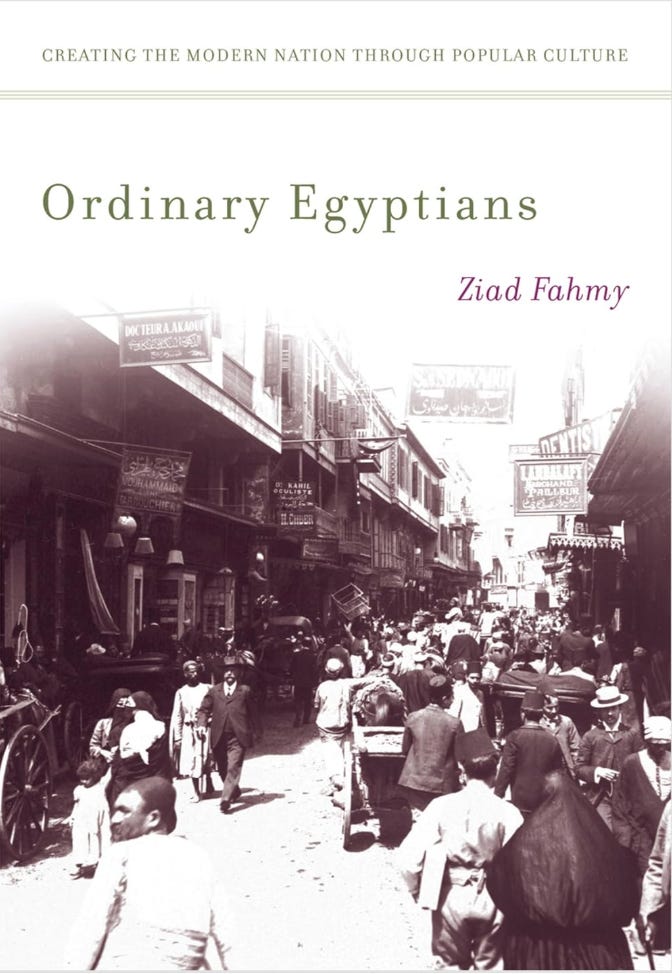
Ziad Fahmy – Ordinary Egyptians: Creating the Modern Nation through Popular Culture, Stanford University Press, 2011
What it is: A groundbreaking work on the emergence of Egyptian nationalism in the late 19th and early 20th centuries, examined through popular media and culture.
Why it matters: Fahmy chooses to shift his focus away from elite politics to the everyday world of ordinary people as he analyzes the birth of Egyptian nationalism. He demonstrates how different media such as popular songs, the theater, and colloquial language became key sites for imagining a modern Egyptian nation.
Who it’s for: Readers looking for a different take on nationalism, modern Middle Eastern history, or the role of popular culture in constructing a national identity.
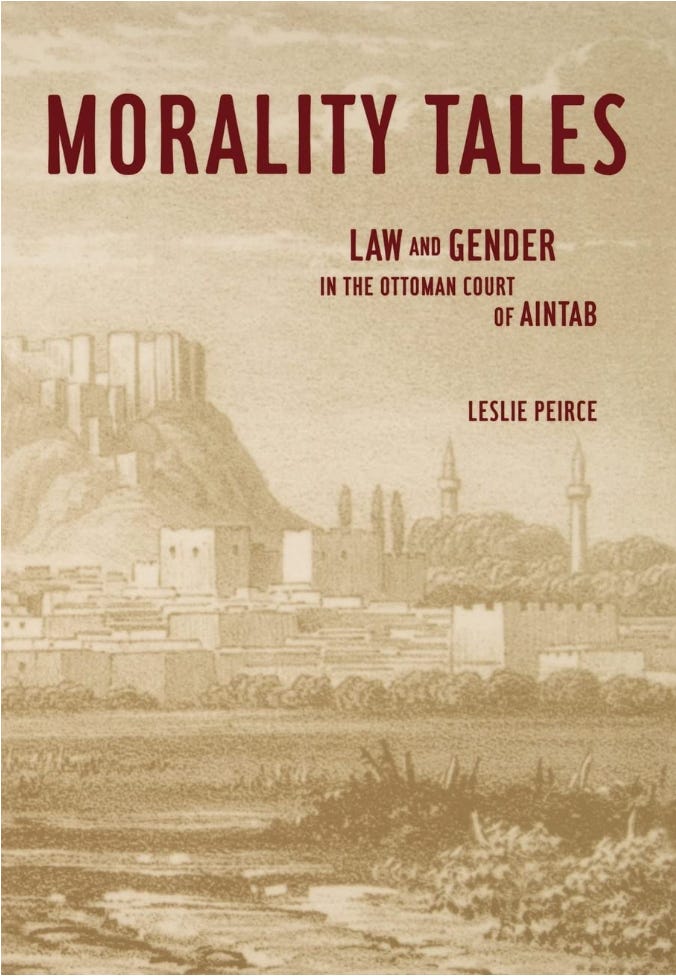
Leslie Peirce – Morality Tales: Law and Gender in the Ottoman Court of Aintab, University of California Press, 2003
What it is: A social history of the town of Aintab, told through the local court records.
Why it matters: This one is a classic. In it, Peirce demonstrates how Ottoman men and women used the local courts to solve their personal, family, and community problems. In doing so, she brings the social environment of 16th-century Aintab vividly to life.
Who it’s for: Those interested in social history, women’s history and everyday life in the 16th-century Ottoman Empire.
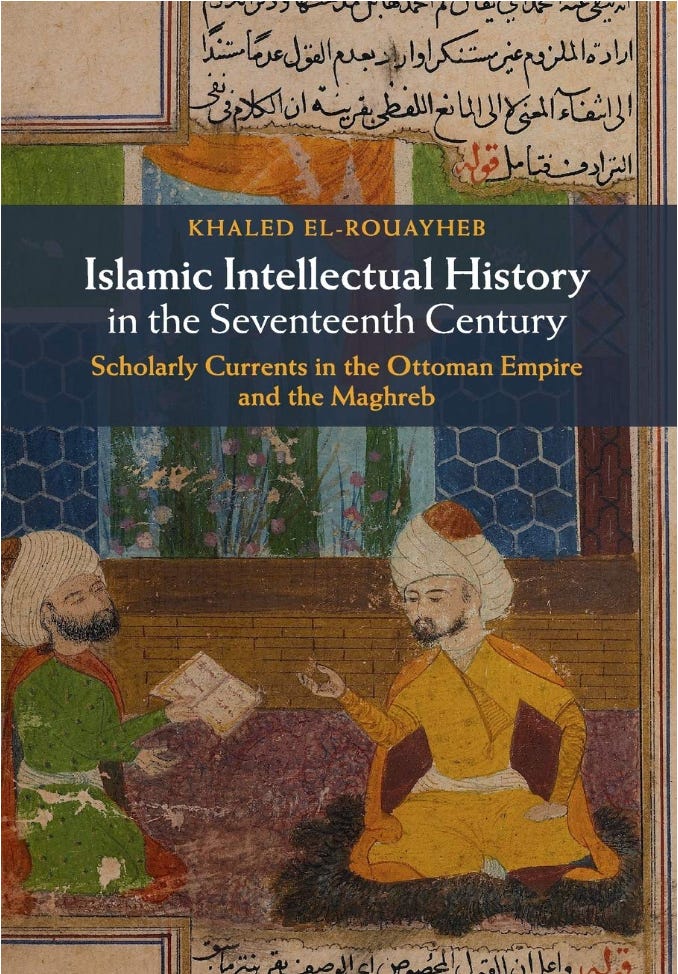
Khaled el-Rouayheb – Islamic Intellectual History in the Seventeenth Century: Scholarly Currents in the Ottoman Empire and the Maghreb, Cambridge University Press, 2015
What it is: A valuable study that focuses on intellectual and cultural production in the 17th century Ottoman Empire and the Maghreb.
Why it matters: El-Rouayheb challenges the commonly held assumption that the 17th century was a period of cultural and intellectual decline in the Ottoman Empire. Instead, he argues that Ottoman and North African scholars continued to produce important works and engaged in vibrant scholarly debates across the region.
Who it’s for: Anyone interested in Islamic intellectual history and intellectual life in the early modern Middle East.
What I’m Working On
I’m almost done with my draft for the final lecture (Week 10) of my online course on Ottoman history. I’m also looking into the technological side of production, doing a bit of research on how to film the lectures, etc…
I have been reading Yiğit Akın’s When the War Came Home and thinking about writing a review of it. Stay tuned!
Thank you very much for reading, and please let me know what you think of these picks.
Until next time.
These are great! I’m so glad I found your substack as I love reading all things Ottoman history.